Property Tax Records let Kane County residents instantly locate parcel numbers, view the tax roll database access, and see the taxable value of land alongside improvement assessment totals. By entering an address or owner name on the Official Kane County Treasurer property‑tax lookup, users can pull a property tax bill download, review the tax assessment date, and explore the tax parcel map view with a property tax rate calculator. This quick snapshot answers the most common “how do I find my tax balance?” questions.
Property Tax Records also reveal payment history, exemption eligibility, and any delinquent tax balance that might trigger a real estate tax overdue notice. Homeowners can verify historic property tax payments, check for senior or agricultural exemptions, and access tax lien search by address to avoid surprise tax foreclosure listings. The portal links directly to the assessors office public records, making it easy to correct errors or start a tax assessment appeals information request.
How to Search Property Tax Records
Kane County property tax records connect a parcel with its assessed value, taxing districts, billed charges, installment dates, and posted payments. In addition, consulting official kane county records confirms that the Treasurer’s lookup helps a reader check a balance, review a prior-year bill, or verify a payment against the correct parcel. It supports property research, payment review, and record matching; it does not replace a title search or a court docket. Match the tax year and parcel number before acting on any result.
Official Search Portal: https://treasurer.kanecountyil.gov/
Steps to Search
- Open the official Treasurer site and locate the property tax search.
- Enter a parcel number when you have it. Otherwise, use the lookup’s address or owner-name fields.
- Select the tax year and review the matching results. If a name produces several results, compare the street address and parcel number.
- Open the correct result and review assessed values, taxable value, charges, due dates, balance, and payment history.
- Use the bill-download or payment function presented for that property. Confirm the tax year, installment, amount, and status before submitting payment.
Property Tax Assessment
A tax record can show the value used for taxation without showing the full assessor’s file. The key fields separate land, improvements, total assessed value, taxable value, and the assessment date. Read those fields as tax data rather than a residential or commercial appraisal.
Property Assessment Date
For Illinois property taxation, January 1 is the assessment date for the tax year. A result’s assessment date identifies the year to which the valuation applies; it is not the bill date, payment date, or date the page was viewed. A later record update can appear under the same tax year, so compare the assessment date and tax year together.
Land Assessment
The land assessment is the value assigned to the parcel’s land after the assessor applies the statutory assessment percentage and any equalization factor. The taxable value of land can differ from the total land figure once exemptions or other adjustments apply. Comparing land figures across tax years can show a change caused by a reassessment, parcel change, or market movement. The county may calculate market value separately; the land figure on the tax record serves the tax process.
Improvement Assessment
The improvement assessment covers the assessed value of buildings and other improvements attached to the land. It does not equal a recent purchase price, insurance replacement cost, or full condition study. A new structure, permit, demolition, or appeal can affect a later assessment.
Total Assessed Value and Taxable Value After Adjustments
Total assessed value combines the land and improvement assessments before eligible adjustments. Taxable value reflects required adjustments, including approved exemptions, and serves as the base used to compute many tax charges. Equalization may change the final taxable value among comparable parcels, so a tax notice and an issued bill can differ at certain points in the county’s annual process.
Assessment Changes
Compare the same parcel across a tax year sequence before deciding that a value rose or fell. Changes can come from a new appraisal, construction, subdivision, appeal decision, equalization, exemption status, or a legal change in how the land is classified. The Treasurer’s bill shows the tax effect; the assessor’s record supplies the valuation details and appeal route.
Property Tax Charges
A property tax bill combines charges authorized by several taxing districts with credits and adjustments. The account identifies the amount billed for a given year and installment, while the individual line items show where the liability came from.
Base Property Tax and Taxing District Charges
“Base property tax” is a comparison term rather than one statewide line. In Kane County, a bill can include county, township, school, municipal, library, fire, and other district charges when the parcel lies within those districts. An address alone may not reveal every district boundary, so read all district names shown on the bill.
Special Assessments
A special assessment is a charge tied to a particular service or project rather than the parcel’s general assessed value. Some recur each year and others apply for a limited period. A line labeled as a special assessment should not be read as a sale-price adjustment, and its collection status belongs to the current bill rather than the land assessment.
Tax Rates
Tax rates convert taxable assessed value into a charge. A rate stated per $100 of taxable assessed value can be used for a rough calculation: taxable assessed value multiplied by the rate, then divided by 100. The county’s calculator may account for taxing districts and other inputs, yet the issued bill controls the amount owed because equalization, credits, and rounding can affect the final line.
Total Tax Due
Total tax due is the bill total after applying eligible credits and prior payments. It may differ from the amount due for one installment. Check the tax year, installment label, due date, and total due field together so a prior-year balance or unpaid installment is not mistaken for the current year’s charge.
Tax Due Dates
Property tax bills use installment due dates, and each installment can cover part of the annual liability. The current bill lists the controlling dates. Do not carry a due date from another year, and do not treat a tax sale date or notice date as the installment due date.
Property Tax Payments
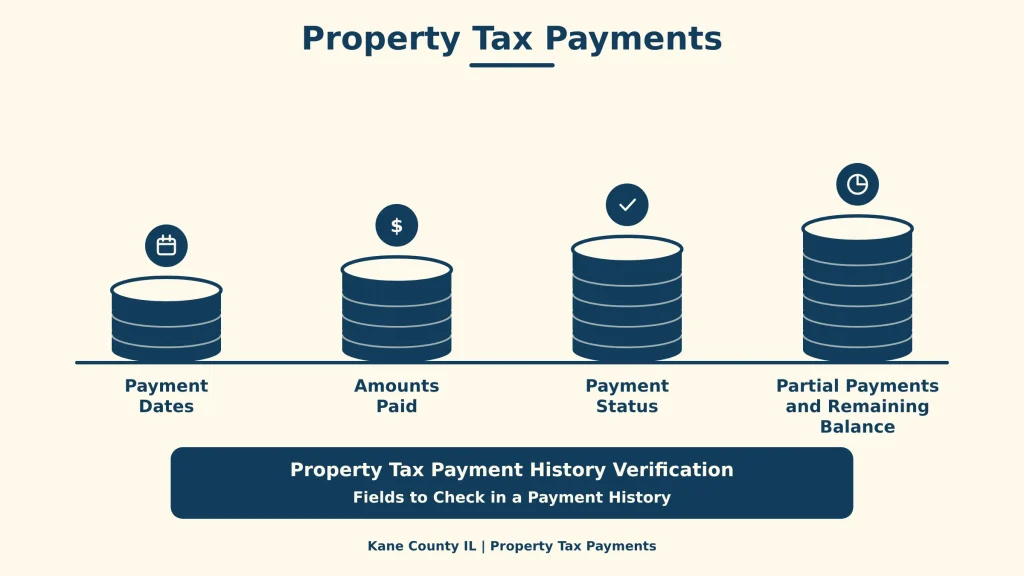
The payment record shows what the Treasurer has posted against the tax account. It is the best source for checking a balance, a partial payment, or an earlier receipt. A payment record confirms tax payment activity; it does not confirm ownership, lien release, or the accuracy of the assessed value.
Payment Dates
The payment date shows when the Treasurer recorded or posted the payment. It may differ from the date a check was mailed, the date a bank processed it, or the date shown on a receipt. For a mortgage closing or property sale, use the payment record and any receipt supplied by the office to match the parcel, year, and installment.
Amounts Paid
Paid amounts may appear as installment payments, partial payments, or credits tied to a specific year. Compare the amount with the amount expected for that installment. A larger figure can include more than one installment, while a credit may reflect a correction or transfer rather than a new cash payment.
Payment Status
Status labels distinguish amounts still due, amounts paid, and accounts with a remaining balance. The wording can change with the tax year and system screen. Read the status beside the balance and payment history rather than relying on a label by itself.
Partial Payments and Remaining Balance
A partial payment reduces the balance but leaves the unpaid amount on the account, with any assessed penalties and interest handled under the law. A zero current-year installment can still leave prior years or another installment unpaid. Review each tax year shown in the result.
Property Tax Payment History Verification
For a lender, buyer, auditor, or court, property tax payment history verification starts with an exact parcel match and the requested tax years. Capture the bill, payment date, amount, installment, and receipt or confirmation number shown by the official system. Keep the documents together; a screenshot without the parcel and year can create a mismatch.
Fields to Check in a Payment History
- Tax year and installment tied to the payment.
- Date the Treasurer posted the payment.
- Amount paid and payment method, when the record displays it.
- Receipt, confirmation, or transaction number, when supplied.
- Balance remaining after the entry.
- Any reversal, correction, or pending entry that affects the account view.
Property Tax Exemptions and Adjustments
An exemption can lower taxable value before tax charges are computed. Eligibility belongs to the assessor, while the Treasurer applies an approved exemption to the bill. A parcel may qualify for one program or several credits, so read each line rather than treating the total assessed value as the taxable base.
Property Tax Exemption Eligibility
Eligibility depends on the specific statute, the owner, the use of the property, required filings, and proof supplied to the assessor. Age, income, disability, veteran status, occupancy, ownership, or agricultural use can affect a claim. A user can review the exemption shown in the tax record, yet the tax screen alone cannot approve a new claim or decide whether an old claim remains valid.
Homestead Exemptions
The homestead exemption applies to an eligible owner-occupied residence. The owner must seek qualification through the assessor and meet the ownership and occupancy rules in effect for the tax year. Rental or nonresident ownership can affect eligibility. The approved exemption appears in the assessor’s record and can change the taxable value used on the Treasurer’s bill.
Senior Exemptions
Senior exemption rules cover age, ownership, occupancy, and income conditions, with required certification. Income limits and filing procedures can change, so an old tax year cannot serve as proof for a current claim. The assessor determines qualification before the exemption reaches the tax bill.
Disability Exemptions
Illinois has separate property tax programs for qualifying people with disabilities and disabled veterans. Each program has its own definition, documentation, and application process. Do not treat a disability status shown elsewhere as an automatic exemption; the assessor must approve the applicable category for the parcel and tax year.
Agricultural Preferences
Qualifying agricultural land may receive a preferential assessment rather than a simple exemption. The assessor determines whether the use and other facts required by the program are met. This treatment can affect land and improvement values differently, which makes the assessor’s record the proper place to confirm it.
Other Eligible Exemptions and Changes to Exemption Status
Other owner-based or use-based exemptions may apply to a parcel, but each has separate proof and deadlines. A sale, transfer, change in occupancy, loss of veteran or disability status, or expiration of a certificate can end or alter a claim. The assessor records the change; the Treasurer then recalculates affected bills. A property tax refund claim process begins with the Treasurer if an approved correction creates an overpayment.
Delinquent Property Taxes
Delinquency appears when a required tax amount remains unpaid after the listed due date. The account can still be searchable, but payment options and collection steps depend on the tax year, installment, and legal status. A balance shown now may include charges from more than one year.
Delinquent Status and Past-Due Balances
Check the delinquent flag beside each tax year and installment. A current-year installment can be unpaid even when an earlier year is paid, or the reverse. The past-due balance may include penalties and interest, so the original tax charge and total amount owed do not always match. For an unpaid property tax list search, use the parcel result to check the balance rather than assuming every delinquent parcel appears in one downloadable list.
Penalties and Interest
Penalties or interest can be added after an installment becomes late and can continue until the balance is resolved. The tax record may show the collection amount as one figure rather than itemizing every component. Use the bill breakdown or office assistance when you need the charge-by-charge detail.
Collection Actions
Collection activity can include notices, legal filings, a tax sale, or a court foreclosure case. The exact path depends on the unpaid year and the amount due. A notice on the property does not by itself transfer ownership. Review the document type, case number, and event date before drawing a conclusion.
Tax Sale Records and Property Tax Foreclosure Listings
A tax sale can place a tax sale certificate into the hands of a purchaser under Illinois law. That certificate is not the same as a court judgment or a deed, and redemption rights can protect the former owner. Property tax foreclosure listings and tax deed auction listings, when available, describe sale activity rather than a completed transfer of title. A court foreclosure record can control after the sale process reaches court.
Tax Lien Searches by Address and Tax Citation Details
A tax lien search by address starts with the parcel’s tax status, yet it is not a full title-lien search. Recorded liens and ownership claims come from title or court records. For tax citation details, use the case or citation number on the notice and confirm the case with the court named in the document. The Treasurer’s tax account shows the balance; it does not contain every filing in the court case.
Real Estate Tax Overdue Notices
A real estate tax overdue notice should be read for the parcel, owner or taxpayer, tax year, amount, due date, and type of action. Additionally, official tax liens resources help verify that a delinquency notice, sale notice, and court notice serve different purposes. Compare those fields with the current tax result and keep the notice with the parcel documents.
Historical Property Tax Records
Historic property tax payments support due diligence for a purchase, refinance, audit, or estate file. The public screen may cover prior years, while older records can sit in a separate archive or require office assistance. A prior-year result should never be mixed with the current bill.
Previous Tax Years
Choose the requested year before reading a historical figure. Each year can have its own assessment, exemption, rate, installment, and payment history. A change in the selected year can change every field on the page, including a balance that looks like a current amount.
Historical Tax Amounts
A historic property tax bill download can show the annual charge and each installment. Historical amounts can change through corrections, refunds, abatements, or collection activity, so the newest archived bill may differ from an earlier copy. Compare the tax year printed on the document with the year in the record.
Historical Property Values
Historical assessments show what the county used for tax purposes in each year. They do not provide a full appraisal history with condition, features, or sale comparables. A value increase can reflect new construction or an appeal, while a decrease can reflect a valuation change or the end of a temporary preference.
Past Payment Records and Changes in Tax Liability
Payment history can show an amount paid against a past installment and any remaining balance. Changes in tax liability can come from assessed value, exemptions, district rates, special assessments, penalties, or credits. One changed factor can affect the bill even when the others stay the same.
Property Tax Record Verification and Corrections
A reliable tax review matches the same parcel, owner, tax year, and transaction across several fields. The Treasurer’s office handles billing and payment records. The Kane County Assessor handles assessed values, parcel characteristics, exemption eligibility, and assessment appeals. A court controls disputes and foreclosure filings that appear in a case docket.
Confirming the Tax Account
Start with the parcel number and full street address. Check that the owner or taxpayer name matches the source being used for the review, and note any difference caused by a recent deed, divorce, trust, estate, or name change. The parcel number is the strongest link between a tax record and the assessed parcel.
Checking the Tax Year
Open each requested year rather than reading the newest screen as a full history. Confirm whether the year is the assessment year, collection year, or year printed on a receipt. A tax bill, payment receipt, and assessor record can use the same year even though each covers a different part of the process.
Reviewing Property Values
Compare land, improvement, total assessed, and taxable values. A large gap between total assessed and taxable value may reflect an exemption or other adjustment. For an appeal, document the parcel facts, valuation issue, and supporting evidence before sending the request to the assessor.
Verifying Tax Charges
Review each taxing district, special assessment, exemption credit, and installment. A rate estimate from a property tax rate calculator does not replace the issued bill. If a district line appears wrong, keep the bill and parcel number together; the Treasurer can identify the billing record, and the assessor can address the underlying parcel or valuation question.
Checking Payment Entries
Match each receipt to the payment date, amount, tax year, and installment in the tax record. Look for a pending, reversed, transferred, or partial entry when the displayed balance does not match your documents. A bank confirmation can show that funds were sent, but the Treasurer’s posted entry shows how the payment was applied.
Correcting Record Errors
Send a correction request with the parcel number, tax year, exact field at issue, and copies of the bill, receipt, deed, or other source document. Ownership and valuation corrections belong with the assessor; billing and payment corrections belong with the Treasurer. Keep a copy of the submitted request and any written response.
Property Tax Notice Explanation
A property tax notice explanation starts by identifying its type. A notice of assessment, tax bill, delinquency notice, sale notice, and court notice each concern a different stage. Read the recipient, parcel, year, amount, response date, and stated action. A notice asking for payment does not decide the assessed value, and a court notice may require a response through the court even when tax can be paid.
Property Tax Refund Claim Process
The property tax refund claim process starts with proof of an overpayment or an approved correction that lowers the tax. Include the parcel, year, installment, receipt, and a clear statement of the amount claimed. The Treasurer reviews whether the account supports a refund and issues the approved result; a request does not create a refund before review.
Tax Assessment Appeals Details
Tax assessment appeal details come from the assessor and the applicable Illinois appeal process. An appeal usually addresses the assessed value of land or improvements, not the rate adopted by a taxing district. Filing dates and forms vary by assessment year and appeal type, so use the current instructions for the year at issue.
Search Problems
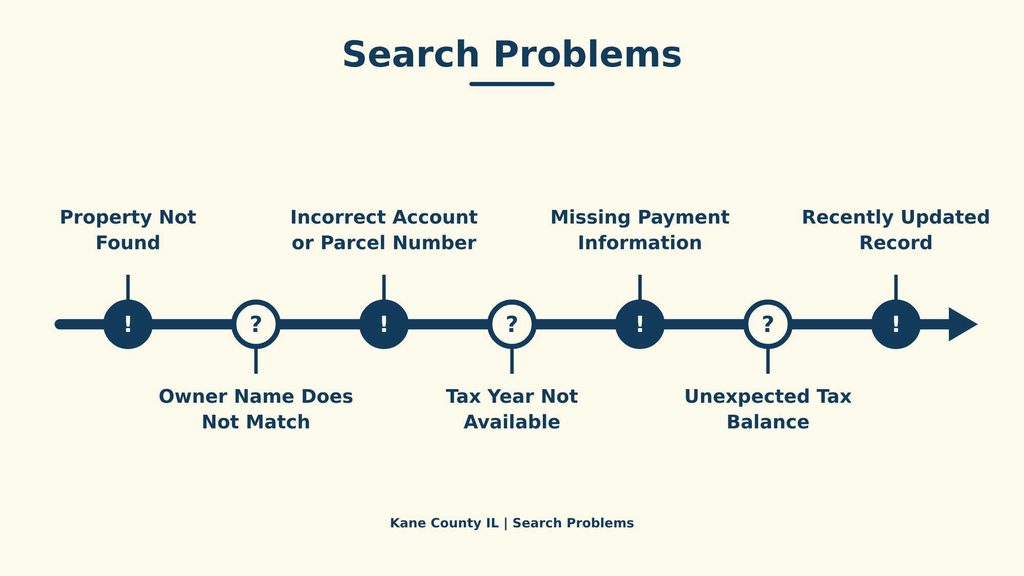
Most lookup problems come from a mismatched parcel, year, name, or payment status. Work through the details below before paying a bill based on an uncertain match. A wrong match can create a duplicate payment or hide an older balance.
Property Not Found
Try the parcel number from a prior bill or assessor record. If searching by address, remove apartment or unit punctuation and confirm the street spelling used by the county. A recent subdivision, address change, or parcel split can place the property under a different account.
Owner Name Does Not Match
Search by parcel number or address when an owner-name result is missing. Names can appear with a suffix, middle initial, spelling change, or former owner. A trust, estate, company, or marital-property change can also separate the tax account from the person named on a deed.
Incorrect Account or Parcel Number
Confirm every digit in the parcel number and compare the full address on the result. A single transposed digit can open a valid record for another parcel. Do not use a result solely because the owner’s surname matches.
Tax Year Not Available
Check whether the public screen starts at a limited year or stores older years in a separate archive. Some records may require office assistance. Request a specific tax year and parcel so staff can locate the right file rather than the latest account.
Missing Payment Information
A missing entry can mean that no payment posted, that the entry is pending, or that the payment was applied under a different parcel or year. Compare the check or card record with any receipt. If the payment was recent, verify whether it has posted before sending it again.
Unexpected Tax Balance
Review every tax year and installment shown, then look for penalties, interest, special assessments, or prior credits. The balance on one installment screen may not be the full annual liability. Compare the displayed total with the printed bill and payment history before making a payment.
Recently Updated Record
A recent update can reflect a posted payment, corrected assessment, parcel change, or refreshed payment status. Read the record date and the underlying fields rather than assuming the newest screen settles an old dispute. Save a copy of the result used for any payment or closing.
Parcel Maps, Rate Calculations, and Public Records
Kane County’s public resources serve different parts of the property tax process. The Treasurer’s tax roll database and payment account center on tax bills and payments, the Assessor’s records center on valuation and exemptions, and parcel maps help confirm location. Using the source that owns the record reduces confusion.
Tax Parcel Map View
A tax parcel map view helps match a street address to the county’s parcel layer. It may show the mapped parcel shape, taxing area, or related records. The map is a public tax-mapping tool, not a survey that fixes a legal boundary. A deed, plat, or survey may control a boundary dispute.
Property Tax Rate Calculator
A property tax rate calculator gives a planning estimate based on the parcel and selected inputs. Check whether the result includes equalization, exemptions, districts, and special assessments before using it for a closing budget. The issued tax bill remains the amount owed.
Assessors Office Public Records and Property Tax Appraisal Reports
Assessors office public records provide the assessed value, property characteristics, sale history, and exemption record used by the assessor. Property tax appraisal reports can support a valuation review, yet the report’s scope depends on the requested year and document. Use the assessor’s official public-record route for those details, then use the Treasurer’s record for charges and payments.
Mortgage Tax Records Verification
Mortgage tax records verification often requires a bill for each requested year and proof that the required installment was paid. A current-year paid screen may not cover the lender’s full request. Send the lender the exact tax year, installment amount, payment date, and receipt so the loan file does not rely on an unlabeled image.
Residential and Commercial Property Tax Records
The same parcel search can cover residential and commercial property tax records. A commercial parcel may carry several improvement components, a different classification, or special district charges, so do not compare only the total assessed value with a residential property. Review each land, improvement, exemption, and district line.
Property Tax Code References
Property tax code references provide the legal wording for assessment, exemption, collection, tax sale, and appeal rules. The code can explain why a process exists, yet it does not prove what happened in one parcel. Pair a legal reference with the current notice, bill, or court record for the actual case.
Contact Details
Use the Kane County Treasurer’s Office for property tax lookup, payment, and record questions. The office maintains information about property tax bills, payment status, and related tax matters. Visitors can check available online resources for property details and payment instructions. For questions about balances, deadlines, or payment records, contact the Treasurer’s Office directly.
Frequently Asked Questions
Property tax records give owners clear insight into assessed values, tax bills, payment history, and any liens attached to a parcel. Accessing these records helps you verify balances, avoid penalties, and plan future expenses. The Kane County Treasurer site lets you search by address or parcel number, view historic payments, and download current bills—all for free.
How can I look up my property tax records in Kane County?
Visit the Kane County Treasurer portal and enter your parcel number or street address. The system displays assessed value, taxing districts, bill amounts, due dates, and any posted payments. Review the balance, compare it with past years, and download a PDF of the current tax bill. Save the parcel ID for future checks to ensure accurate matching.
Where can I find unpaid property tax lists or tax delinquency records online?
The Treasurer’s website features a “Delinquent Tax List” link. Click it to see parcels with overdue balances, including owner names, amounts owed, and last payment dates. Use this list to identify potential investment risks or to contact owners about resolving liens.
What steps are needed to request a property tax refund?
First, verify that you overpaid by checking the payment history in the online portal. Then download the refund claim form from the Treasurer’s page. Complete the form, attach proof of payment, and mail it to the address listed. Expect processing within 30 days, after which the refund will be issued by check or direct deposit.
How do I search for tax lien information by address?
Enter the property’s address into the “Tax Lien Search” field on the Treasurer’s site. The report shows lien amounts, filing dates, and creditor details. Use this data before buying a home to avoid hidden debts. If a lien appears, contact the tax collector for payoff instructions.
Can I calculate the taxable value of land using an online services?
Yes. The portal includes a tax rate calculator. Input the land’s assessed value and the applicable district rates. The tool returns the yearly tax amount, breaking down each district’s share. This helps you budget accurately and compare costs across neighborhoods.